


Dr Michelle Rodrigues answers your questions on melanoma
4 min read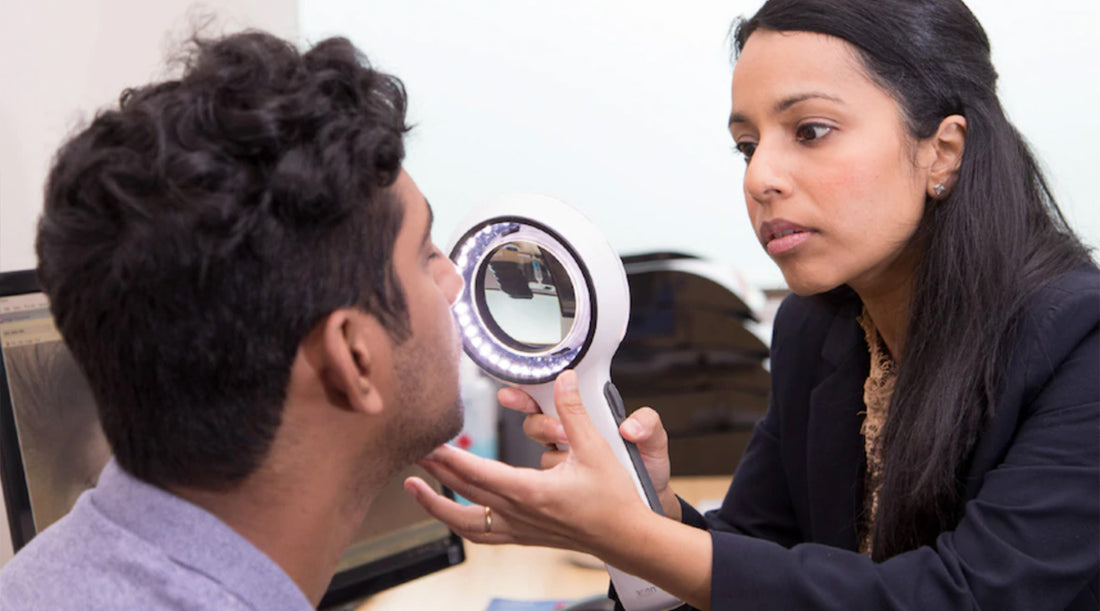
Dr Michelle Rodrigues is an Australian dermatologist based in Melbourne. She serves as a consultant dermatologist at several of Melbourne's public hospitals, and has worked and continues to collaborate with world-renowned pigment and skin of colour centres in the U.S.A, Europe and Asia. We've partnered with Dr Rodrigues in this Q&A to cover 5 common questions relating to melanoma.
What are some risk factors for melanoma that people may not be aware of?
Everyone knows that sunburn is a big risk factor for melanoma, but the type of sunburn is important too. Most melanomas occur on skin that is intermittently exposed to the sun. That means one sunburn can cause melanoma. The more severe the sunburn, such as blistering sunburns, the higher the risk. Chronic (ongoing) sun exposure is also a big risk factor.
People who take medicines that suppress the immune system are also at higher risk of developing melanomas.
There are some risk factors that you cannot change. If you have lots of moles or atypical (funny looking) moles, fair skin, red hair, and the tendency to burn quickly when you go out in the sun, your risk of melanoma is higher.
About 10% of melanomas are genetic, so a family history of melanoma increases your chances of developing one. And of course, the biggest risk factor for developing a melanoma is if you have already had one – you may just develop more over time.
What is the risk of developing melanoma if a parent or sibling has had melanoma?
Results from scientific research vary, but, on average, if your parent or sibling has had a melanoma, your risk increases about 2-fold.
How quickly can melanomas develop?
Melanomas arise over weeks to months. However, most melanomas grow in the top layer of the skin, where they may stay for several months to many years. Melanomas become more dangerous when they are in the deeper layers of the skin. When they are in the deeper layers of the skin, they can spread to other parts of the body.
A less common type of melanoma, called nodular melanoma grows immediately down into the deeper layers of skin. It grows quickly, within weeks and if it is not treated, it could spread to other parts of the body. It is important to note that nearly 70% of melanomas come up as completely new moles rather than old moles changing, so watch out for new spots that appear on your skin.
Why would anyone see a dermatologist to check their skin annually if melanomas can develop so quickly?
The rationale for annual skin checks is detecting EARLY melanomas. Although melanomas can grow quickly, often it can take years before they become dangerous. If melanomas are caught early, they are often cured with surgery alone. Scientific evidence tells us that melanomas detected during a skin check with your doctors are less aggressive than those found by patients.
Routine screening can also detect more common skin cancers that tend to grow much slower than melanomas. Basal cell carcinomas and squamous cell carcinomas are examples of this.
Your annual skin check with your dermatologist will also give you the chance to learn how to prevent skin cancers in your skin type, learn how to self-check your skin at home (usually recommended 4 times per year (when the seasons change) and will give you a chance to have other skin conditions treated. An example of a common condition we see during skin checks is rosacea.
Should people with skin of colour worry about melanomas?
People with fair skin have a much higher risk of melanomas. However, that doesn’t mean that people with skin of colour don’t get melanomas. People with skin of colour are just at very low risk of developing them.
Not all melanomas are caused by the sun. These are the type of melanomas that people with skin of colour tend to get. For example, melanomas on the soles and palms of the feet as well as melanomas of the nail are the most common type of melanomas seen in those with skin of colour.
You can find out more about Solbari’s certified UPF50+ sun protective range by clicking the links below:
Women UPF 50+
Men UPF 50+
Sun Hats UPF 50+
Accessories UPF 50+
SPF 50+ Sunscreen


